
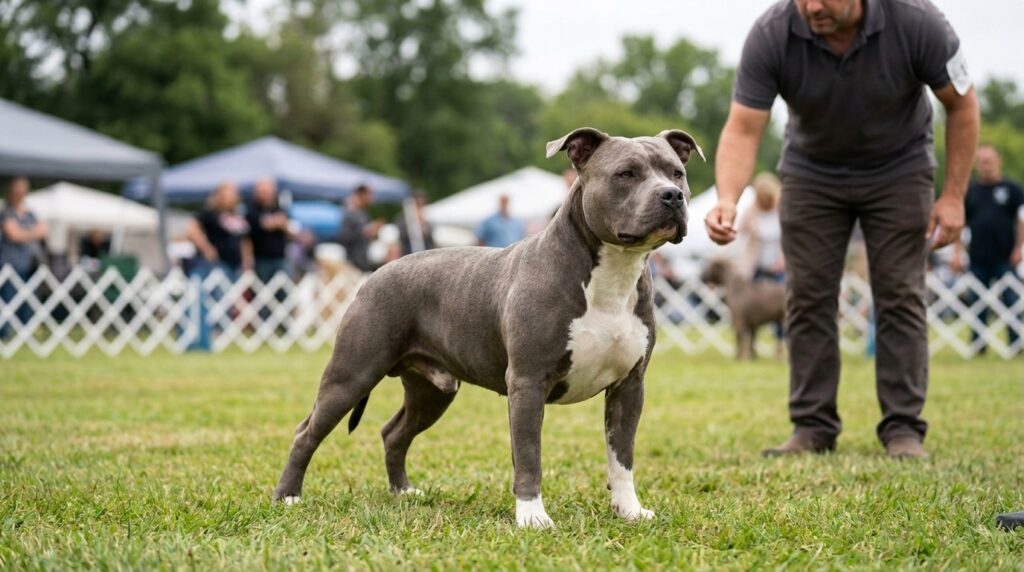
A show dog needs more than a strong stance and a polished coat. Smooth, comfortable movement matters too. A dog that can walk, turn, stand, and recover comfortably is better prepared for training and everyday life than one pushed to look muscular at any cost.
Supporting American Bully mobility and recovery starts with a simple principle: build fitness gradually, observe the dog closely, and involve a veterinarian when movement changes. This guide offers general ideas for a thoughtful routine. It is not a diagnosis or an individual exercise prescription.
What mobility means for a show dog
Mobility is the ability to move comfortably through ordinary activities. Watch how your dog rises from rest, walks on a level surface, turns, and settles again. Look for a relaxed, even gait and willingness to move. These observations do not diagnose a condition, but they can help you notice changes early.
In the ring, handlers may focus on stacking, gaiting, and presentation. Those skills matter, but the dog’s comfort should come first. A beautiful pose is not proof that a dog is pain-free. The goal of conditioning is a fit, capable companion, not a particular silhouette or maximum muscle size.
Interest in performance-dog health is also reflected in the 2026 AKC Canine Health in Motion Symposium, which included sessions on conditioning, tendon disease, recovery, rehabilitation, and lifelong health for active dogs.
Start with an individual health baseline
Before increasing exercise, consider your dog’s age, current fitness, previous injuries, and any health concerns. A veterinarian can assess whether a new activity is appropriate and advise whether further evaluation is needed. This is especially useful if your dog has been inactive, is still growing, has gained weight, or has a history of orthopedic problems.
Breed-wide information can help owners ask better questions, but it cannot predict an individual dog’s condition. Bullistik’s American Bully health guide discusses health screening and responsible care. Use it as background, then discuss your own dog’s needs with a veterinary professional.
Establish a simple baseline before changing the routine. Note what activities your dog already enjoys, how long they remain comfortable, and whether they seem stiff or unusually tired afterward. Avoid judging progress by appearance alone. Comfortable movement, willingness to participate, and normal behavior after exercise are more useful measures.
Build fitness gradually
Consistency is usually more useful than occasional hard workouts. Begin with familiar, controlled activity your dog can handle comfortably. A leash walk on a level, non-slip surface may be a reasonable starting point for many healthy dogs, but duration and pace should match the individual. If your dog is new to exercise, ask your veterinarian how to begin.
Increase one aspect of the routine at a time. For example, build duration before adding more demanding terrain or faster movement. Sudden jumps in distance, intensity, or repetition can make it harder to tell what your dog tolerates. Keep early sessions easy enough that your dog remains responsive and moves willingly.
Choose activities that encourage controlled movement rather than repeated impact. Calm walking and appropriately supervised movement may suit some dogs, while others need a different plan because of age, health, or structure. Do not assume that a treadmill, swimming, weighted equipment, jumping, or a particular drill is right for every dog. Ask a veterinarian or qualified canine rehabilitation professional before introducing equipment or strenuous work.
Your existing show-dog conditioning and nutrition guide covers preparation and feeding. Pair that information with a mobility-focused approach that places comfort, gradual progression, and recovery alongside show goals.
Warm up and cool down thoughtfully
Give your dog time to transition into activity. Start with easy movement at a comfortable pace before asking for more focused gaiting or show practice. This lets you observe how the dog is moving that day. If they seem stiff, reluctant, or uneven, keep the session gentle and consider postponing demanding work.
After training, ease back to a calm pace rather than ending abruptly after intense activity. Keep the routine quiet and positive. Avoid forcing stretches or repeatedly handling a sore area. If your dog resists a movement, stop and seek veterinary advice instead of trying to work through the resistance.
Make recovery part of the plan
Fitness develops through a balance of activity and rest. Dogs vary in how quickly they recover, so there is no single schedule that suits every American Bully. Keep demanding sessions limited, allow lighter days when needed, and avoid adding a new workout immediately before a show. A dog that arrives tired or uncomfortable is not benefiting from last-minute extra conditioning.
Keep a brief training log with the activity, duration, surface, and your dog’s response during and afterward. Note changes such as unusual fatigue, stiffness after resting, or a new reluctance to repeat a movement. A log can help you identify patterns and give your veterinarian clearer information if you need advice.
Recovery also includes ordinary care. Maintain a healthy body condition with guidance from your veterinarian, provide access to fresh water, and offer a comfortable place to rest. If the dog’s routine changes because of travel, weather, or an event schedule, adjust the workload rather than expecting the same performance every day.
Know when to stop and ask for help
Stop the session if your dog appears uncomfortable or their movement changes. Do not treat limping as a training problem to correct through repetition. The American College of Veterinary Surgeons lists signs associated with cruciate ligament disease that can include difficulty rising, reduced willingness to play, limping, stiffness, and pain. These signs can have different causes, so only a veterinarian can assess your dog.
- Noticeable limping or favoring one leg
- Difficulty getting up, sitting, or walking as usual
- Reluctance to move, play, or repeat a familiar activity
- Swelling, an obvious change in posture, or signs of pain
- A movement change that persists or returns after exercise
Pause strenuous activity and contact your veterinarian when you notice these changes. Sudden, severe pain, inability to use a limb, or significant injury warrants prompt veterinary attention. Do not give human pain medication unless a veterinarian specifically instructs you to do so.
When veterinary rehabilitation may help
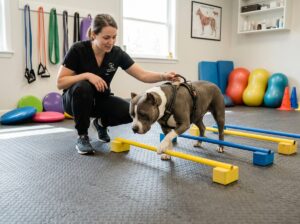
Rehabilitation is not limited to dogs recovering from surgery. The University of Tennessee’s Small Animal Physical Rehabilitation Service describes potential benefits such as improved mobility, increased muscle mass in younger active dogs, and support for maintaining muscle as dogs age. A veterinary professional can assess movement and tailor activities to the dog’s needs.
That does not mean every show dog needs formal rehabilitation. It may be worth discussing if your dog has recurring stiffness, an injury history, difficulty returning to normal activity, or a specific conditioning goal. Ask who will evaluate your dog, what the program involves, and how progress will be monitored. Follow the plan you receive rather than copying exercises from another dog’s routine.
Frequently asked questions
How often should my American Bully exercise?
There is no universal schedule. Age, health, current fitness, and the type of activity all matter. Ask your veterinarian to help set a safe starting point and adjust it based on your dog’s response.
Should I train if my dog is limping slightly?
No. Stop strenuous activity and contact your veterinarian for advice. A mild limp can still signal discomfort, and repeating the movement may make it harder to identify the cause.
Can home exercises replace veterinary rehabilitation?
Not when a dog has pain, an injury, or a medical condition. Ask a veterinary professional which activities are appropriate. Exercises that help one dog may not be safe for another.
A sustainable show routine respects the dog behind the performance. Build fitness in small steps, make room for recovery, and respond early when movement changes. With veterinary guidance and careful observation, owners can support their American Bully’s comfort in training, in the ring, and at home.