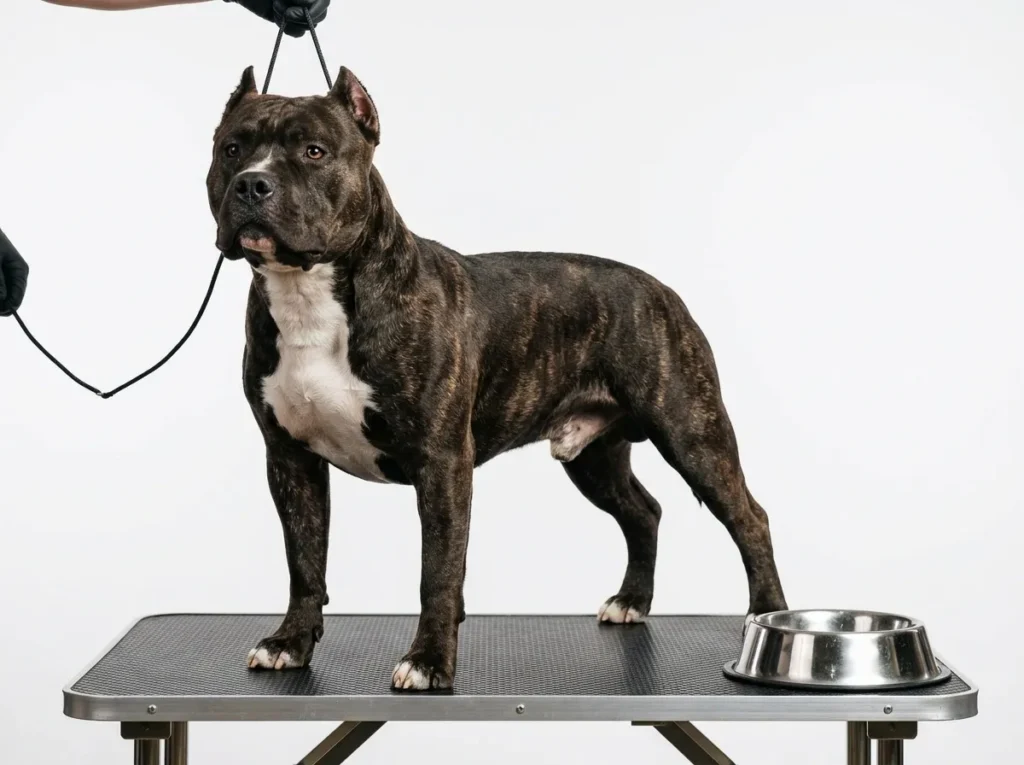
Feeding a bully breed show dog is nothing like feeding a typical family pet. These dogs carry dense muscle, heavy bone, and a physique that demands a very different nutritional strategy — one built around lean mass, joint longevity, and show-ring performance. Yet, many owners still reach for generic kibble off the shelf and wonder why their dog looks soft, moves stiffly, or loses definition before competition day.
This guide gives you a breeder-level breakdown of everything that matters: macronutrient targets, the raw versus kibble debate, conditioning protocols, key supplements, and how to dial in your dog’s diet in the weeks leading up to a show. Whether you are preparing for your first bully dog show or refining a seasoned champion’s regimen, getting nutrition right is the single most controllable factor in your dog’s performance.
Why Nutrition Is Different for Bully Breed Show Dogs

The American Bully is built differently from most breeds. Its wide chest, heavy bone structure, and dense musculature place unique demands on the body — demands that generic “all breeds” dog food formulas simply are not designed to meet. When you feed a bully breed on a standard maintenance formula, you often end up with one of three problems: soft, undefined muscle that photographs poorly in the ring; excess weight that stresses joints and shortens a show career; or a coat that looks dull and lacks the shine that catches a judge’s eye.
Show dogs are performance athletes. Like any athlete, they require fuel that is precisely matched to their output, their body composition goals, and the specific stresses their sport places on them. For a bully breed, that means prioritizing lean muscle development, protecting joints, supporting coat and skin health, and maintaining the kind of consistent energy that keeps your dog alert and responsive during a long show day.
Understanding this from the start will save you months of trial and error and help you build a nutrition program your dog can thrive on year-round — not just in the weeks before a show.
Macronutrients: Getting the Numbers Right
The foundation of any solid bully breed nutrition plan is getting your macronutrient ratios right. Protein, fat, and carbohydrates each serve a distinct role, and the balance between them will determine whether your dog builds clean, defined muscle or adds soft, structurally unhelpful bulk.
Protein: the primary building block
Protein is the most critical macronutrient for bully breeds. Adult show dogs in active conditioning should be on a diet with a minimum of 28 to 30 percent protein from high-quality, named animal sources. Look for formulas that lead with real chicken, beef, lamb, or fish — not generic “meat meal” or vague by-product listings.
Protein fuels muscle repair after training sessions, supports immune function, and contributes directly to the tight, defined look that judges reward in the show ring. Low-protein diets, or diets that rely on plant-based protein from pea or soy, are inadequate for the metabolic demands of an actively trained bully breed show dog.
Fat: energy, coat, and skin health
Fat is where many owners make mistakes in both directions. Too little fat leads to a dull, flat coat and low energy. Too much fat — especially in a dog that is not burning it through adequate exercise — turns quickly into the soft, “marshmallow” bulk that hides muscle definition and puts unnecessary stress on joints and the cardiovascular system.
For show conditioning with the goal of lean muscle and coat quality, aim for a dietary fat content between 14 and 18 percent. If your dog is in a heavy conditioning phase and training intensively, you can push toward the upper end of that range. In the weeks before a show when exercise may be reduced to manage stress, taper fat intake slightly to keep definition sharp.
Carbohydrates: keep them controlled
Bully breeds do not require high carbohydrate diets. Carbohydrates are a cheap calorie source and are used extensively by budget dog food manufacturers as filler. Corn, wheat, soy, and white rice provide energy but offer little nutritional density and are common triggers for the skin sensitivities and digestive issues that bully breeds are prone to.
When selecting a kibble, prioritize formulas where named animal proteins appear as the first two or three ingredients, and where carbohydrate sources — if present — are whole, digestible grains like oatmeal, barley, or brown rice. Grain-free is not automatically better, but ingredient quality always matters.
Raw vs. Kibble: What Actually Works for Show Dogs
This is one of the most debated topics in the bully show community, and the answer is more nuanced than either camp usually admits. Both raw feeding and high-quality kibble can produce excellent results. The key is execution, not the method itself.
The case for high-quality kibble

A premium, high-protein kibble formulated for performance or bully-type breeds offers consistency, convenience, and the assurance of meeting AAFCO nutritional standards. For show handlers who travel frequently to competitions, kibble is dramatically easier to manage — no thawing, no bacterial contamination risk, no storage challenges at show venues.
The critical qualifier is quality. A 30-percent-protein kibble built on real chicken meal and whole grains is nutritionally worlds apart from a 22-percent-protein kibble built on corn and by-products. Read labels with the same scrutiny you would apply to your own diet. The first ingredient should always be a named animal protein, and you should be able to identify every ingredient on the list without needing a chemistry degree.
The case for raw feeding
A properly balanced raw diet — typically based on the BARF (Biologically Appropriate Raw Food) model — can deliver exceptional results for bully breed show dogs. Owners who successfully execute raw feeding often report tighter muscle definition, improved coat condition, smaller and firmer stools, and better overall energy levels.
However, “raw” done poorly is worse than premium kibble. A raw diet that is not balanced for calcium, phosphorus, and essential micronutrients will create deficiencies over time that can damage bone development in younger dogs and compromise immune function in adults. If you choose raw, consult a veterinary nutritionist or work with an experienced breeder to build a properly balanced protocol before switching.
The hybrid approach
Many experienced bully breeders and show handlers use a hybrid approach: a high-quality kibble as the foundation, with raw protein toppers — cooked or raw ground beef, eggs, or organ meat — added several times a week to boost palatability and nutritional density. This approach gives you the best of both worlds: the consistency and compliance assurance of a commercial formula, plus the coat and muscle benefits of fresh animal protein.
Whichever method you choose, consistency is more important than perfection. Frequently switching formulas stresses the digestive system, makes it harder to identify food sensitivities, and introduces unnecessary variables during show preparation. Find what works for your dog and stick with it.
Supplements That Make a Real Difference
The supplement market for bully breeds is full of products making exaggerated claims. In practice, a small number of well-researched supplements genuinely move the needle for show dog conditioning. Here is what is worth adding to your dog’s daily protocol.
Joint support: glucosamine and chondroitin
The heavy muscle mass that makes bully breeds visually impressive in the show ring also places significant mechanical stress on their joints — particularly hips, elbows, and the spine. Daily glucosamine and chondroitin supplementation supports cartilage health and joint lubrication, which matters both for longevity and for the fluid, effortless gait that judges look for during movement evaluation.
Start joint supplementation early — ideally before you see any signs of stiffness — and maintain it consistently throughout your dog’s show career. Prevention is far more effective than treatment once joint degeneration has begun.
Omega-3 fatty acids
Fish oil is one of the most impactful supplements you can add to a show dog’s diet. According to the AKC, fish oil for dogs supports heart health, promotes a silky coat, reduces itchy and flaky skin, and can help relieve joint pain — all directly relevant to a bully breed show dog’s performance and presentation. Wild salmon oil or a marine-sourced omega-3 supplement dosed at the manufacturer’s recommendation for your dog’s body weight is a straightforward, evidence-backed addition to any show dog’s feeding plan.
Probiotics and digestive enzymes
A show dog that cannot properly absorb nutrients is a show dog that will not reach its physical potential, regardless of how good the food is. Bully breeds can be prone to digestive sensitivity, and the stress of travel, new environments, and show-day routines can compound this. A daily probiotic supports a healthy gut microbiome, reduces gas and loose stools, and improves nutrient absorption — all of which directly translate to coat quality, muscle tone, and energy levels.
Show Conditioning: The 8-Week Protocol
Nutrition and conditioning cannot be separated. What your dog eats must be matched to what your dog does physically. Here is a practical framework for the eight weeks leading up to a major show.
Weeks 1 to 4: building phase

In the first four weeks, focus on consistent, high-protein feeding paired with structured exercise designed to build and define muscle. Weighted walks — using a properly fitted weighted vest or drag harness — are one of the most effective conditioning tools for bully breeds. Combine these with controlled treadmill work or swim sessions if available to build cardiovascular fitness without joint impact.
This is also the phase to evaluate body condition honestly. You should be able to feel your dog’s ribs with light pressure but not see them prominently. A visible waist from above and a slight abdominal tuck from the side are the targets. If your dog is carrying excess weight, reduce carbohydrates and increase structured activity before adjusting protein intake.
Understanding the common health issues in American Bullies during this phase is also important — overworking a dog with undiagnosed hip or joint issues during the building phase can cause setbacks that derail your entire show preparation timeline.
Weeks 5 to 7: refinement phase
In weeks five through seven, the goal shifts from building to refining. Maintain protein intake but slightly reduce overall caloric density if the dog has reached target body condition. Increase the frequency of movement-specific training — controlled stacking, gaiting on lead, standing on the table — to sharpen the neuromuscular patterns your dog will rely on in the ring.
This is the phase where show-specific training and physical conditioning overlap most directly. A dog that is nutritionally optimized but undertrained for ring behavior will still underperform. Use these three weeks to integrate both dimensions of preparation.
Week 8: show week
In the final week before a show, resist the temptation to change anything. Do not switch foods, add new supplements, or dramatically alter feeding amounts. The dog’s system needs consistency and stability. Reduce high-intensity conditioning exercise to allow full muscular recovery — your dog should enter the ring feeling fresh, not fatigued.
Maintain hydration carefully, especially if you are traveling to a warmer climate or an indoor venue with poor air circulation. Dehydration affects muscle fullness, coat appearance, and alertness. Bring your dog’s regular food and water from home to eliminate digestive disruption from unfamiliar sources.
Reading Your Dog’s Body: The Ongoing Assessment
No nutrition plan, however well-designed, is static. Your dog’s needs will shift with age, activity level, seasonal changes, and the demands of a show schedule. The most important skill any show handler or breeder can develop is learning to read their dog’s body condition accurately and adjust accordingly.
Check body condition weekly using the five-point body condition score system. Feel for rib coverage, assess waist definition from above, and check for fat padding over the hips and tail base. A show bully at peak condition should feel like a well-muscled athlete — lean but full, with no soft or flabby areas and no protruding bones.
Watch your dog’s coat, stool quality, and energy levels as ongoing indicators of nutritional status. A dull coat often signals insufficient omega-3s or overall caloric inadequacy. Loose or frequent stools may indicate a food sensitivity or overly rich diet. Sluggishness in training can point to insufficient caloric intake, anemia, or the early onset of a health issue worth investigating with your veterinarian.
Pairing sharp nutrition with thorough DNA and genetic health testing gives you the most complete picture of your dog’s baseline health and helps you make informed decisions about long-term breeding and conditioning strategies.
Final Thoughts
Nutrition is not a shortcut. It is a foundation. The bully breed show dog that consistently wins in the ring is almost always the dog behind which there is a handler who has paid close attention to what goes into the bowl every single day — not just in the weeks before a show, but across the entire year.
Start with quality protein, get your macros dialed in, support the joints and coat with the right supplements, and build a conditioning protocol that is matched to your show calendar. Do those things consistently, and the results in the ring will follow.
At Bullistik Show Dogs, nutrition and care are at the core of everything we do — from the moment our puppies are born to the day they step into the show ring. If you have questions about conditioning or training your bully breed show dog, feel free to explore our blog or get in touch with our team directly.